
Affiliate marketing didn’t pay my rent for the first eight months. Not even close.
I remember checking my dashboard every single morning like it owed me something. Some days it showed $0.00. One particularly rough Tuesday, I made 43 cents and somehow still felt proud of it.
I’m telling you this upfront because most articles on this topic open with some version of “affiliate marketing is a great way to earn passive income” and then jump straight into theory. That’s not how it actually goes. It’s messy, slow, and a little humiliating before it starts working. But it does eventually work, and I want to walk you through what actually happened when I built this thing from scratch.
What Affiliate Marketing Actually Looks Like Day-To-Day
If you’re new to this, here’s the plain version: you recommend a product or service using a special tracking link, and when someone buys through that link, you get a cut. Amazon Associates, ShareASale, Impact, and CJ Affiliate are the big platforms most beginners start with.
Sounds simple. And technically, it is. What nobody tells you is that the “simple” part is maybe 10% of the actual work. The other 90% is getting people to trust your recommendation enough to click, and then trust the product enough to buy.
I learned that the hard way.
Mistake #1: Promoting Products I’d Never Used
My first affiliate posts were about phone accessories I’d never touched. I pulled specs from Amazon listings, rewrote them in my own words, and called it a review.
Nobody bought anything. Not one sale in six weeks.
Then I wrote a review of a phone case I’d actually dropped my phone in twice (it survived both times), mentioned the annoying way the charging port flap gets stuck, and included a photo of the scuff mark it left on my desk. That post converted at a rate almost 9 times higher than my “researched” posts.
Lesson: people can smell a fake review through the screen. Real experience shows up in small, weird details that you simply can’t invent.
Mistake #2: Chasing High-Commission Products Instead of Right-Fit Products
I once spent three weeks pushing an expensive software tool because the commission was 40%. I’d never used it seriously. My audience — people looking for simple make-money-online tips — didn’t need it and didn’t buy it.
Compare that to a $12/month tool I actually used daily. Lower commission, way more sales, because it actually matched what my readers were trying to solve.
High commission percentages look great on paper. They mean nothing if the product doesn’t fit your audience’s actual problem.
Mistake #3: Ignoring FTC Disclosure Rules
Early on, I buried my affiliate disclosure in tiny gray text at the very bottom of the page, hoping nobody would notice. That’s not just risky — it’s against FTC guidelines in the US, and similar rules apply under the UK’s Advertising Standards Authority (ASA).
Now I put a short, honest line right near the top of any post with affiliate links: something like “This post contains affiliate links, meaning I may earn a small commission if you buy through them, at no extra cost to you.” Readers respect that. Trust actually went up, not down.
Mistake #4: Putting All My Eggs in One Platform’s Basket
I built an entire content strategy around one affiliate program. Then that program cut commissions by half overnight with zero warning. My income dropped instantly.
Since then, I always run at least two or three affiliate programs per niche, so one policy change doesn’t wipe out a month’s income.
Mistake #5: Writing for Google Instead of Writing for a Human
I once stuffed a post with “best affiliate marketing tools 2025” so many times it read like a broken robot. Rankings actually got worse, and bounce rate shot up.
Search engines like Google have gotten much better at detecting keyword stuffing and low-value content. Write like you’re explaining something to a friend over coffee. Mention your keyword where it naturally fits — in the title, the intro, a subheading or two — and then just talk normally.
Mistake #6: No Follow-Up System
For the longest time, someone would visit my site, read a post, maybe click a link, and that was it. I had no email list, no way to reach them again.
Setting up a simple email capture through something like MailerLite or ConvertKit changed that completely. Now when I publish a new comparison post, I can email my list directly instead of hoping they stumble back onto my site.
Mistake #7: Expecting Fast Results
This one hurt the most because it’s the hardest to fix with a “step.” I genuinely believed I’d be making solid money within 60 days. It took me closer to 10 months before affiliate income covered even a small monthly bill.
Affiliate marketing rewards consistency more than talent. The people who quit at month three almost always quit right before things start moving.
A Simple Step-By-Step Way To Start (Without My Mistakes)
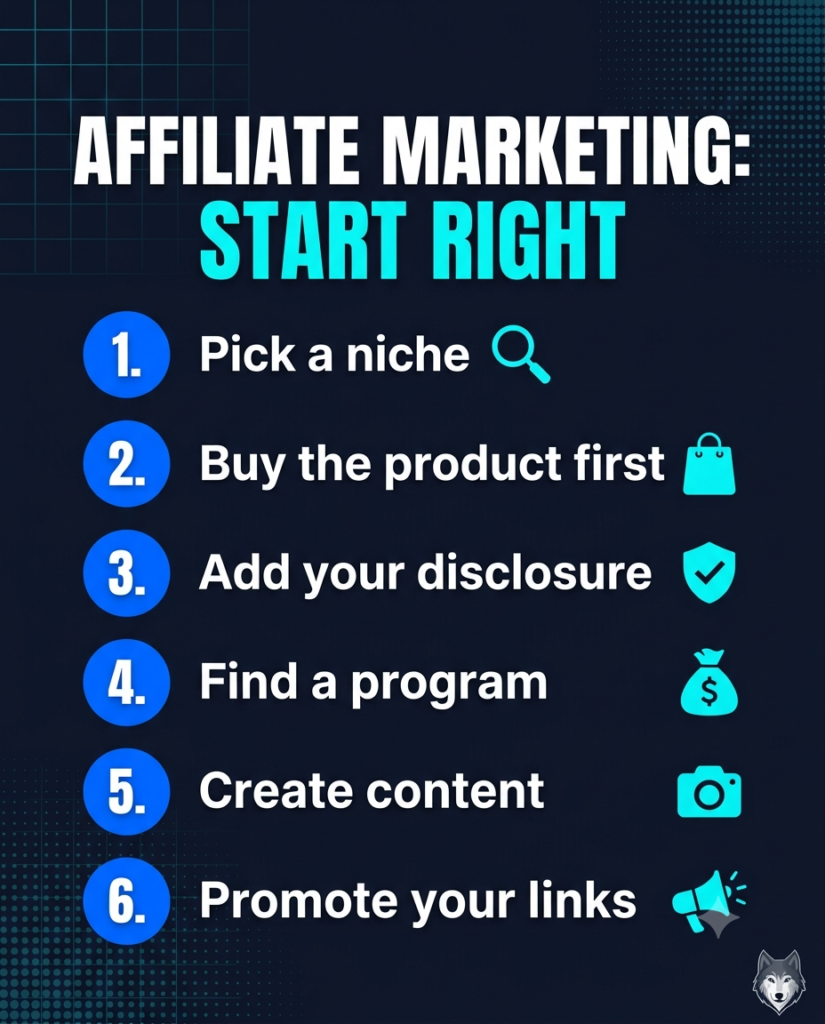
- Pick a niche you already know something about. Don’t guess. Use your own hobbies, job skills, or problems you’ve solved yourself.
- Join one or two affiliate programs that fit that niche. Amazon Associates is fine for beginners; ShareASale and Impact have more niche-specific brands.
- Buy or use the product before recommending it, even if it’s a $15 gadget. Genuine experience is the whole game.
- Write the review like you’re texting a friend, not filing a report. Include the annoying parts, not just the good ones.
- Add your disclosure near the top, clearly and honestly.
- Set up a basic email list from day one, even before you have many subscribers.
- Track clicks and conversions monthly using your platform’s dashboard, and drop anything that isn’t converting after a fair trial period.
- Give it a minimum of six months before judging whether a niche is working.
A Real Example That Actually Worked
One of my most consistent earners is a comparison post between two budget wireless earbuds, priced under $30 each. I bought both with my own money, used them on runs and video calls for two weeks, and wrote down every annoyance — one pair’s case scratched easily, the other’s mic cut out on windy days.
That post still brings in small but steady commissions over a year later, because it answers a real question people are actually typing into Google, using details only someone who owned the product would know.
Common Mistakes To Avoid Going Forward
- Don’t recommend something purely because the commission is high.
- Don’t hide your affiliate disclosure.
- Don’t expect month-one results.
- Don’t rely on a single affiliate program or a single traffic source.
- Don’t write reviews for products you haven’t personally tested when you can avoid it.
If you want a deeper breakdown of building the traffic side of this — the part that actually gets eyes on your affiliate content — our guide on beginner-friendly freelance and content side hustles covers a lot of overlapping ground.
For platform-specific rules, it’s also worth reading the FTC’s official guide on endorsements and testimonials, since policies do get updated from time to time.
Final Thoughts
Affiliate marketing isn’t a lottery ticket, and it isn’t a scam either. It’s closer to planting something and checking on it regularly for months before it actually grows into anything worth harvesting.
The version of me checking that dashboard for 43 cents didn’t know it would eventually turn into a steady side income. If you’re in that same spot right now, staring at a mostly empty dashboard, that’s not proof it’s not working. It usually just means it hasn’t had enough time yet.
For More Information, visit: APKSITE1




2 Comments on “Affiliate Marketing: 7 Costly Mistakes I Made (And Fixed)”