
Freelance writing jobs for beginners sound simple until you actually try to land your first one. I remember opening Upwork for the first time, seeing a blank profile page staring back at me, and thinking “okay, where do I even start?” I had zero portfolio, zero clients, and zero clue what to charge. Sound familiar?
I’ve been in the content and blogging space for about five years now, and freelance writing was actually the first thing I ever got paid for online — before I touched SEO, before I built any websites. So this isn’t theory. This is the stuff I wish someone had told me before I wasted two weeks applying to jobs that never replied.
My First (Terrible) Freelance Writing Gig
My first paid piece was a 500-word blog post for $8. I’m not exaggerating. It was for a content mill site, and I remember being thrilled when the payment cleared PayPal — until I did the math and realized I’d made less than $2 an hour once you counted the research time.
I share that not to discourage you, but because almost every beginner writer goes through some version of this. The trick isn’t avoiding the bad gig — it’s not staying there for six months out of comfort. I stayed way too long because the money, however small, felt “safe.”
Where to Actually Find Freelance Writing Jobs for Beginners
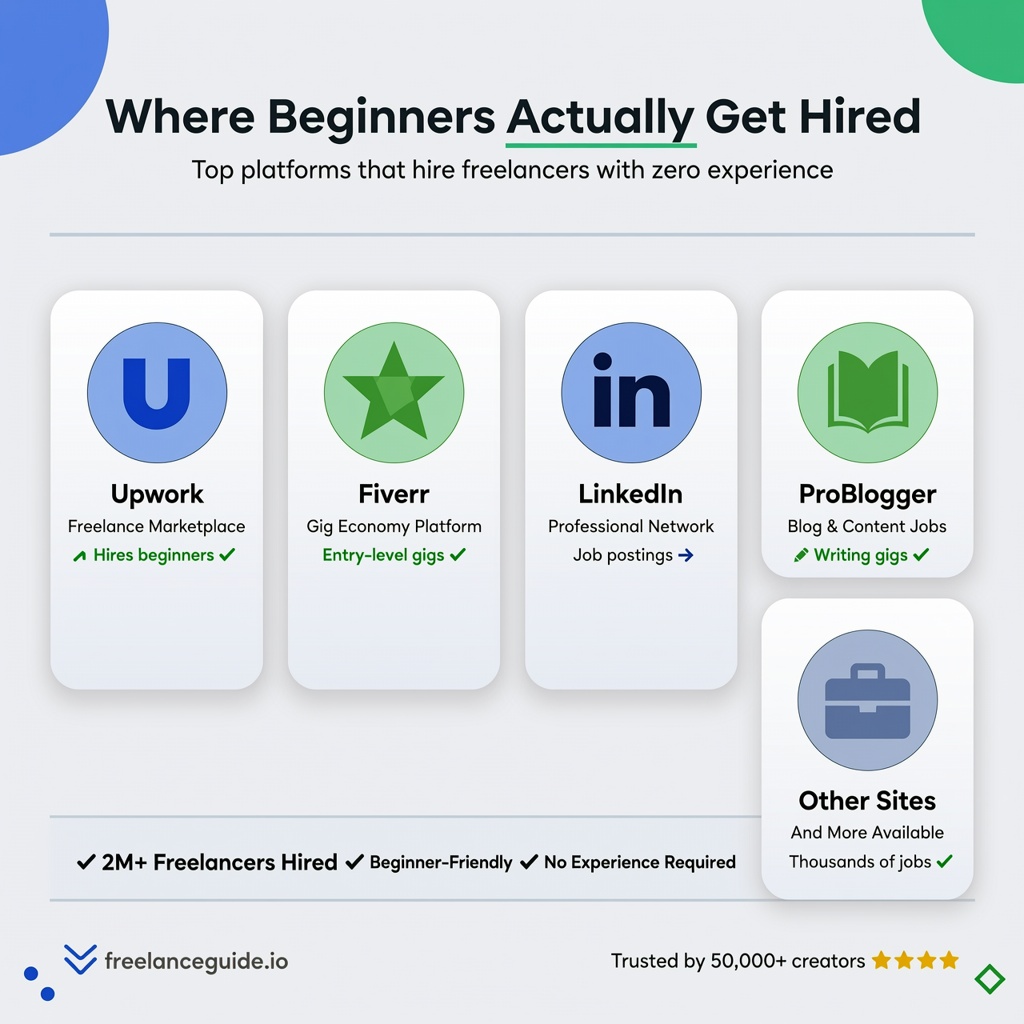
This is usually the part people get stuck on, so let’s be specific. Here’s where I’ve actually gotten paying work, not just places that sound good on paper:
- Upwork – Good for volume. You’ll compete with a lot of people, but it’s genuinely how I landed my first three long-term clients.
- Fiverr – Works better once you have 2-3 samples. Buyers here browse gigs rather than post jobs, so your gig title and thumbnail matter a lot.
- Contena – A paid job board, but the listings are usually higher quality than free boards.
- ProBlogger Job Board – Old-school, but still active. A lot of small business owners post here directly.
- We Work Remotely / FlexJobs – More corporate and marketing-agency style gigs. Rates tend to be better.
- LinkedIn (yes, really) – I’ve gotten more long-term clients from posting consistently on LinkedIn than from any job board combined. People message you directly once they see a few posts.
- Reddit’s r/freelanceWriters – Job leads get posted daily, and it’s a good place to sanity-check a rate someone’s offering you.
Don’t apply everywhere at once. Pick two platforms, build them up properly, and expand later.
Step-by-Step: Landing Your First Client
- Write 2-3 sample pieces before you apply anywhere. Pick a niche you actually know something about — even if it’s just from hobbies or your day job. Clients hire confidence, and confidence comes from having something to show.
- Set up a simple portfolio. You don’t need a fancy website. A free Contra profile or even a Google Doc with links works fine when you’re starting out.
- Apply with a short, specific pitch. Skip the generic “I am a hardworking writer” opener. Mention the client’s actual business or article and one idea for how you’d approach it.
- Quote a real rate, not a guess. More on this below — but don’t just say “I charge whatever.”
- Deliver early, not just on time. This one single habit got me repeat clients faster than anything else.
- Ask for a short testimonial after your first project. Most clients are happy to give one if you ask right after they approve the work — not weeks later.
- Reinvest your first few paychecks into learning, not just spending. I put my first $200 into a basic SEO course, and it changed what kind of clients I could pitch to.
What Should You Actually Charge?
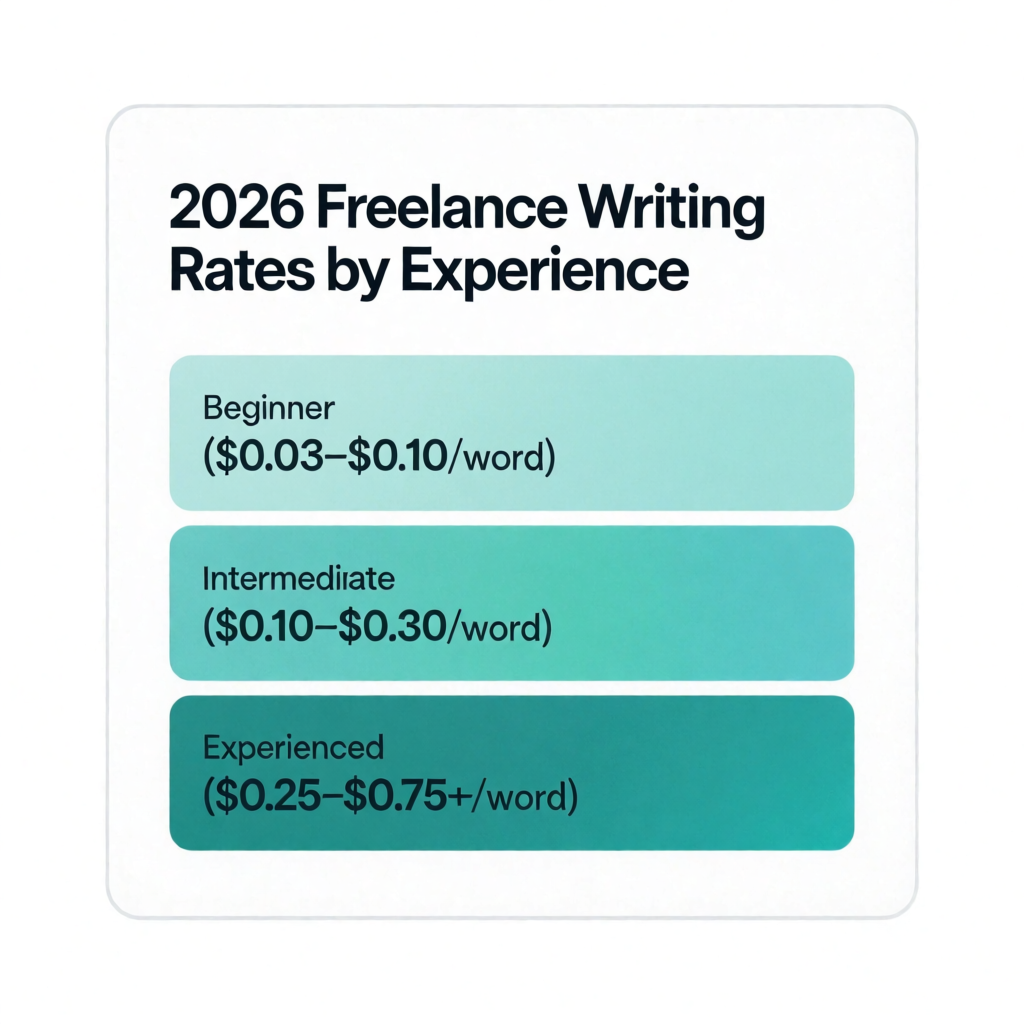
This is the question I get asked the most, so here’s real 2026 market data instead of a guess.
| Experience Level | Typical Rate (Per Word) | Typical Pay for a 1,000-Word Article |
|---|---|---|
| Beginner (0–1 yr) | $0.03 – $0.10 | $30 – $100 |
| Intermediate (1–3 yrs) | $0.10 – $0.30 | $100 – $300 |
| Experienced (3+ yrs, niche expertise) | $0.25 – $0.75+ | $250 – $750+ |
A mistake I made early on: I stayed at content-mill rates ($0.02–$0.03/word) for way too long because I was scared to ask for more. When I finally raised my rate to $0.08/word, I lost exactly zero clients. Nobody even blinked.
For UK Readers Specifically
If you’re freelancing from the UK, a few practical differences from US-based writers:
- You’ll need to register as a sole trader with HMRC once your side income crosses the threshold — it’s a quick online process, not a big deal.
- Most US clients pay via PayPal or Wise. I’d recommend Wise for currency conversion — the fees are noticeably lower than PayPal’s built-in exchange rate markup.
- Keep a simple record of invoices and payments from day one. It saves you a headache at tax time, and HMRC’s Self Assessment is far less scary once you’re organized.
Common Mistakes Beginners Make
- Undercharging out of fear, then burning out. If you can’t sustain the rate, you can’t sustain the client relationship either.
- Applying to jobs without reading the brief properly. Clients notice this instantly, and it’s the fastest way to get ignored.
- Writing only generic “how to” content. Picking a niche — even a narrow one like pet care, personal finance, or SaaS — makes you stand out far faster than being a generalist.
- Ghosting on deadlines instead of communicating. Life happens. A quick heads-up email keeps the relationship intact; silence kills it.
- Waiting for the “perfect” portfolio before applying. You’ll never feel fully ready. Apply anyway.
Frequently Asked Questions
Do I need a degree to get freelance writing jobs as a beginner?
No. Most clients care about your writing samples and reliability far more than formal qualifications.
How long did it realistically take you to earn a steady income from freelance writing?
For me, it took about four months of consistent applying before I had two repeat clients covering a reasonable chunk of my monthly expenses.
Is Fiverr or Upwork better for someone with zero experience?
Upwork tends to have more entry-level job postings you can directly apply to, while Fiverr works better once you already have a couple of samples to attract buyers.
Can UK-based writers work with US clients without complications?
Yes, this is extremely common. The main things to sort out are your payment method (Wise works well) and keeping basic records for HMRC.
What niche should a complete beginner start with?
Start with something you already understand from your job, hobbies, or daily life — it’s far easier to write convincingly about something you actually know.
Final Thoughts
Freelance writing jobs for beginners aren’t complicated to find — they’re just tedious to start, in the same way any new skill is tedious in the first few weeks. The gap between “still applying” and “getting paid regularly” is usually just consistency, not talent.
If I could go back and tell myself one thing, it’d be this: stop refreshing job boards and start pitching with something specific to say. That’s the part that actually moves the needle.
For more information, visit: APKSITE1