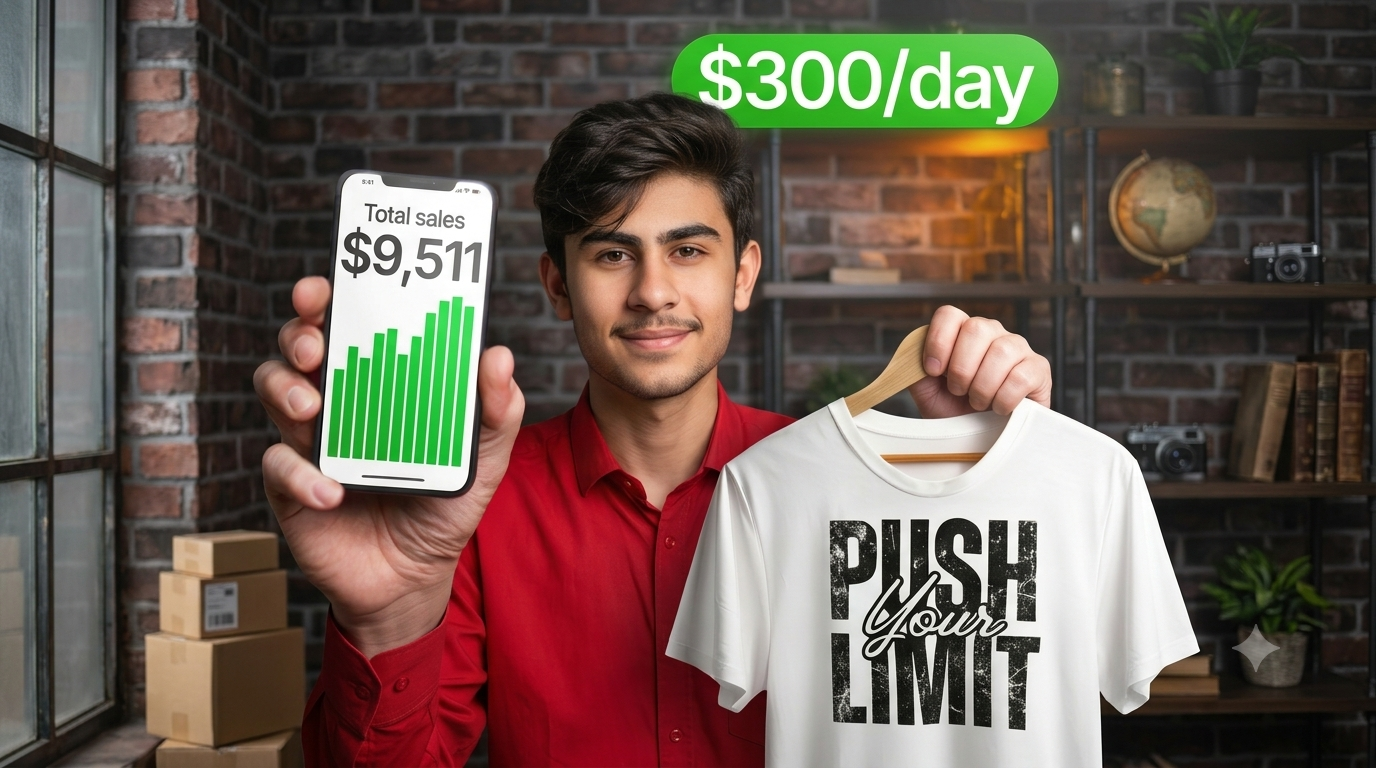
I still remember sitting on my couch at 11pm, watching a YouTube short that promised “$5,000/month with zero inventory,” and thinking — okay, this is it, this is my thing.
Print on demand for beginners always looks the same in those videos. Upload a design, slap it on a mug, sit back while Shopify prints the money for you. No warehouse. No unsold stock rotting in your garage. Just pure passive income.
I want to save you the version of this story where you find out the hard way. So here’s what actually happened when I spent a stretch of evenings and weekends building a print on demand shop from scratch — the mistakes, the surprisingly boring parts, and the stuff that actually worked.
So what is print on demand, really?
Quick version, because you probably already half-know this: you design something — a t-shirt graphic, a phone case pattern, a coffee mug quote — and upload it to a platform. When someone buys it, a supplier prints it, packs it, and ships it directly to the customer. You never touch the product. You never hold stock. You just get paid the difference between your price and the base cost.
That part is genuinely true. What the ads leave out is everything else.
My first mistake: picking a “trendy” niche instead of one I understood
My first shop was built around motivational gym quotes. Why? Because I saw three other accounts doing well with it and figured I’d just… also do that.
Big mistake. I don’t lift. I don’t follow fitness culture. I had no idea what actually resonates with that audience versus what sounds good to an outsider. My designs were fine, technically, but they had zero personality because I was guessing at what gym people wanted instead of knowing it.
The shops that eventually worked for me were built around things I actually cared about — one was dog-related designs, because I have two dogs and spend an unreasonable amount of time in dog owner Facebook groups. I already knew the jokes, the pain points, the inside references. That knowledge showed up in the designs without me forcing it.
Lesson: pick a niche you can talk about for twenty minutes without checking notes. It shows in the product.
Step-by-step: how I’d actually start today
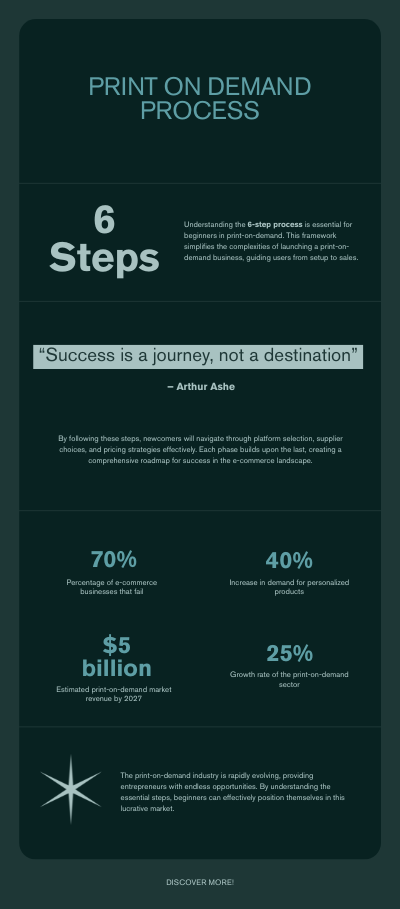
If I were starting print on demand for beginners advice from scratch, here’s the order I’d do things in, skipping the mistakes.
1. Pick a platform to sell through. I used Etsy for my first shop because the built-in search traffic means you’re not starting from zero followers. Shopify gives you more control and a proper brand, but you’re responsible for all your own traffic. Amazon Merch is another option, though it has an application process and can take a while to get approved.
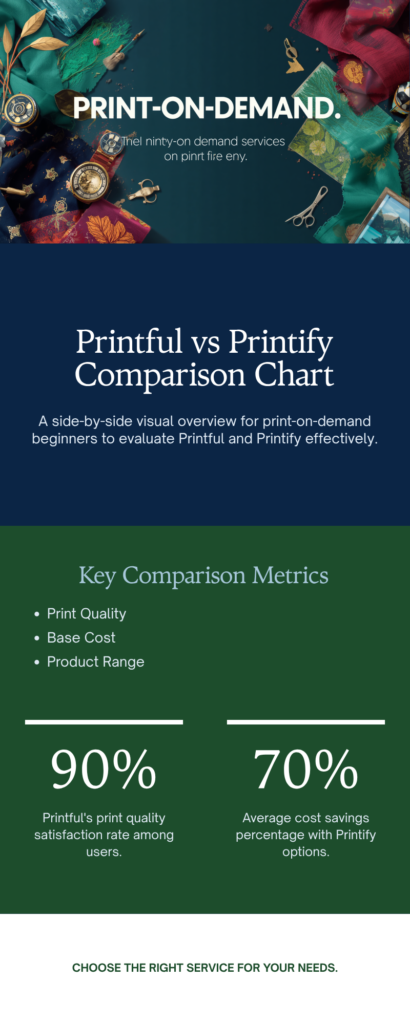
2. Choose a print supplier. I tested Printful and Printify side by side for about a month. Printful’s print quality was slightly better on dark shirts, but Printify was cheaper on base costs, which mattered more once I was trying to stay competitive on price. Neither is “wrong” — just test a sample order yourself before committing, because photos on their site don’t tell you how a shirt actually feels or fades after a wash.
3. Design in something you can actually use. I don’t have fancy design chops. I used Canva for most of my early designs, which is honestly fine for text-based designs and simple graphics. Once I got more serious I moved some work into Procreate on an iPad, but you do not need that to start.
4. Order a physical sample before you list anything. This is the step I skipped the first time, and it bit me. My “cream” colored shirt printed with a design that looked slightly yellow-tinted in real life — totally different from how it looked on my screen. I only found out because a customer messaged me, confused. Order the actual product and hold it in your hands before you put it in front of paying customers.
5. Write listings like you’re explaining it to a friend, not an SEO robot. My early listings were stuffed with keywords and read like nobody wrote them. Sales picked up noticeably once I rewrote them in plain language — what the shirt is, who it’s for, why someone would want it, sized like an actual person talking.
6. Price with your margin already worked out. Base cost plus platform fees plus a margin that’s actually worth your time. I once priced a mug at $14.99 and, after Etsy fees, Printify’s base cost, and shipping, made about ninety cents. Ninety cents. For hours of design work. Do the math before you list, not after your first sale confuses you.
The mistakes that actually cost me money
Mistake 1: Ignoring mockup quality. My first product photos were the generic mockups straight from Printify’s library — same white background every other beginner uses. Shoppers scroll past that in half a second. Once I started using slightly more lifestyle-style mockups (a mug on a kitchen counter, a shirt on an actual model), click-through improved.
Mistake 2: Not checking copyright on fonts and clipart. I used a “free for personal use” font on a design that sold decently, only to get a takedown notice a few weeks later because it wasn’t actually licensed for commercial resale. Now I only use fonts and graphics explicitly marked for commercial use, and I keep a folder of proof-of-license screenshots just in case.
Mistake 3: Expecting fast results. My first month, I made two sales. Total. Not two hundred — two. It took close to four months of consistent listing before things felt like they had any real momentum. Anyone promising a fast timeline is selling you a course, not a realistic expectation.
Mistake 4: Listing too few designs. I sat on five designs for weeks, tweaking them, instead of publishing and moving on. More listings generally means more chances to get found in search, even if some individual designs never sell a single unit.
Mistake 5: Not reading return and quality complaints. Early on I ignored a couple of “the print cracked after one wash” messages, assuming it was a one-off. It wasn’t — it was a fulfillment issue with that specific product type, and I kept selling it for another month before I noticed the pattern.
Mistake 6: Underestimating platform fees. Between Etsy listing fees, transaction fees, payment processing, and Printify’s base costs, a decent chunk of revenue disappears before it reaches you. Budget for that upfront instead of being surprised by it.
Mistake 7: Trying to do everything myself immediately. I tried to be the designer, marketer, customer service rep, and bookkeeper on day one. Burned out fast. Starting small — one product type, one platform — would have saved me a lot of overwhelm.
So what is print on demand, really?
Quick version, because you probably already half-know this: you design something — a t-shirt graphic, a phone case pattern, a coffee mug quote — and upload it to a platform. When someone buys it, a supplier prints it, packs it, and ships it directly to the customer. You never touch the product. You never hold stock. You just get paid the difference between your price and the base cost.
That part is genuinely true. What the ads leave out is everything else.
Is print on demand profitable for beginners?
It can be, but not quickly. Profit margins are usually thin at first — often just a few dollars per item after platform fees and base costs — so early “profit” is more about learning what sells than making real income. Most sellers see meaningful profit only after several months of consistent listings.
Do you need a business license to start print on demand?
It depends on your country and how much you earn. Many beginners start as a hobby seller and only need to register as a sole proprietor or self-employed once income becomes regular. Check your local tax authority’s threshold — for example, the UK’s trading allowance or the US’s self-employment reporting rules — before scaling up.
Which is better for print on demand beginners: Etsy or Shopify?
Etsy gives beginners built-in search traffic, which helps when you have zero followers and no marketing budget. Shopify gives you more branding control and keeps more of your profit margin, but you’re responsible for driving all your own traffic. Most beginners start on Etsy and move to Shopify once they have proven designs.
Can you do print on demand without design skills?
Yes — text-based designs, simple quote graphics, and basic layouts made in free tools like Canva sell perfectly well and don’t require illustration skills. Many successful print on demand shops rely more on clever wording or niche relevance than complex artwork.
How long does it take to make money with print on demand?
For most beginners, the first genuine sales trickle in within the first few weeks, but consistent, meaningful income usually takes three to six months of regular listing and refining designs. Anyone promising fast results in days is describing the exception, not the norm.
A realistic example
One of my better-performing designs was a simple line-drawing of a specific dog breed with a short, breed-specific joke underneath. Nothing fancy — I made it in about twenty minutes. It’s still one of my steadier sellers, months later, because it’s specific enough that the exact people searching for it feel like it was made for them. That’s usually a better signal than “will this appeal to everyone,” which in my experience usually means it appeals to no one in particular.
What I’d tell someone starting today
Print on demand for beginners isn’t a scam, but it’s also not passive in the way the ads suggest. It’s a real small business — slower to start, more fiddly than expected, and genuinely rewarding once a design clicks with the right audience.
Start with one niche you actually know something about. Order a sample before you sell it. Expect your first month to be quiet. And don’t be surprised if the design you were sure would flop ends up being the one that pays off.
If you’re going to try it, just go in with your eyes open about the slow part — because that’s the part nobody puts in the thumbnail.
For more information, visit: APKSITE1