
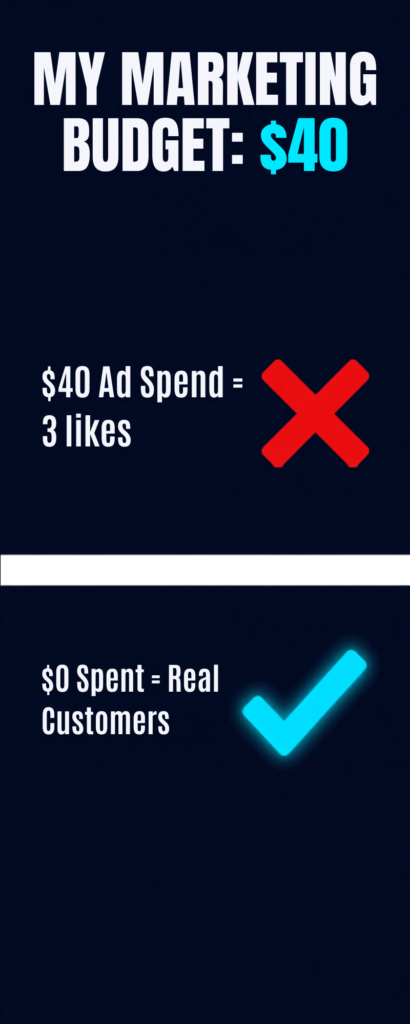
I still remember staring at my bank account after covering rent for my first small setup, thinking there was maybe forty dollars left for “marketing.” Forty dollars. That’s barely one boosted Instagram post. So I did what most broke small business owners do — I panicked for about a day, then got to work figuring out how to market a small business with no budget at all.
That was a few years back, and honestly, some of what I learned during that scrappy phase still works better than the paid stuff I use now. This isn’t theory I read in a course. This is what I actually did, what flopped, and what quietly became my biggest source of customers for months.
If you’re in that same spot right now — good product or service, zero ad budget, maybe a laptop and a phone — here’s what actually moved the needle for me.
Why “No Budget” Doesn’t Mean “No Results”
Here’s the thing nobody tells you when you start out: a lot of paid marketing is just automating things you could be doing manually for free. Ads speed things up, sure. But in the early days, speed isn’t what you need. You need proof that people want what you’re selling, and that proof comes from actual conversations, not a Facebook Ads Manager dashboard.
I learned this the hard way after wasting my first real ad budget (about $60, so not exactly high stakes) on a boosted post that got me three likes and zero sales. That failure pushed me back toward the free stuff, and that’s when things actually started working.
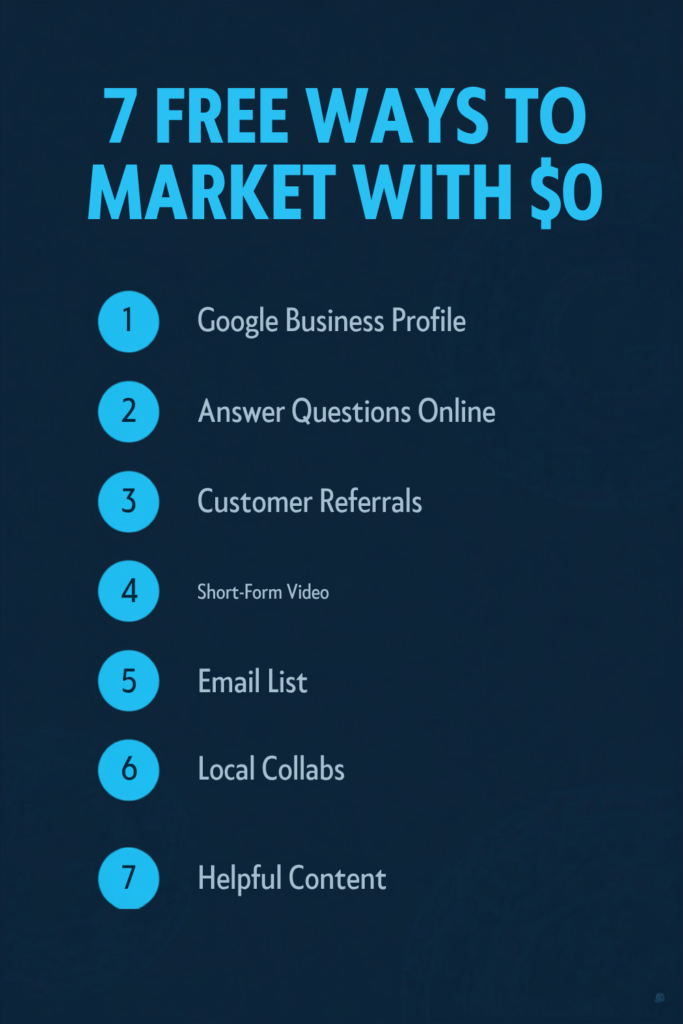
1. Google Business Profile — Set It Up Properly, Not Just “Done”
This one’s free and most people half-do it. I made this mistake myself for almost two months — I set up my Google Business Profile, added a name and address, and left it at that.
Once I actually filled it out properly (hours, photos, services, a proper description with the actual words customers search for), I started showing up in local “near me” searches within about three weeks. No money spent, just time.
What actually helped:
- Adding real photos, not stock images — customers can tell
- Asking happy customers directly for a review right after a good interaction (timing matters more than wording)
- Posting updates through the “Google Posts” feature roughly once a week
You can set this up through the Google Business Profile site directly, and it’s genuinely one of the highest-return free tools I’ve used.
2. Answer Questions Where Your Customers Already Are
Before I had any marketing budget, I spent evenings on Reddit, Facebook groups, and niche forums related to my industry — not promoting myself, just answering questions honestly.
This felt slow and pointless for about a month. Then people started direct messaging me asking if I offered the thing I kept explaining in comments. That’s when it clicked: people trust advice more than ads, especially from small businesses.
The mistake I made early on was being too salesy in these spaces. I got a couple of posts removed from a Facebook group for that. The lesson: answer the question fully first, mention what you do only if it’s genuinely relevant, and let people ask for more.
3. Turn Existing Customers Into Your Marketing Team
I didn’t have money for referral software, so I did something almost embarrassingly simple — I just asked.
After finishing a job or sale, I’d say something like, “If you know one person who’d find this useful, I’d really appreciate the introduction.” No discount, no gimmick, just an honest ask.
About 1 in 6 customers actually followed through. That doesn’t sound huge, but for a business with zero ad spend, word-of-mouth referrals became my most reliable source of new customers for the first year.
4. Short-Form Video, Even If You Hate Being on Camera
I resisted this one for a long time because I genuinely dislike being filmed. But a friend convinced me to try posting short, unpolished videos on Instagram Reels and TikTok showing behind-the-scenes bits of the work.
My first video got 40 views. My fifth got a few thousand, purely because it showed something people were curious about — a process most customers never see. No editing software beyond the free version of CapCut, no ring light, just my phone propped against a coffee mug.
Quick tips that helped:
- Show process, not polish — people like seeing the “how,” not a perfect ad
- Post consistently, even mediocre content, rather than occasionally posting something “perfect”
- Reply to every single comment for the first hour after posting — it noticeably boosted reach

5. Email List, Built the Unglamorous Way
I didn’t have a fancy lead magnet or pop-up tool at first. I just kept a simple sign-up sheet at checkout and later moved to a free Mailchimp plan once I had a website.
The mistake here was waiting too long to start. I had customers for almost a year before I began collecting emails, and I’ve genuinely lost count of how many people I could’ve re-marketed to for free during that time.
Once I started sending a short, honest monthly update (not a sales pitch, just useful tips and what I was working on), repeat purchases went up noticeably. Free tools like Mailchimp or MailerLite handle this without needing a marketing budget at all.
6. Collaborate With Other Small Businesses Nearby
This one surprised me. I reached out to a few non-competing local businesses that shared my customer base and suggested we cross-promote each other — a shoutout on their social page, a flyer at their counter, whatever made sense.
Most people said yes immediately, because they were in the exact same “no budget” situation I was in. This cost nothing but a bit of time and a friendly email.
7. Content That Actually Answers Something
If you have a blog, YouTube channel, or even just a Google Doc you turn into posts later, write about the exact questions your customers ask you before buying. This is the slowest tactic on this list, but it compounds.
I wrote a genuinely boring how-to article about something customers kept asking me over the phone. It took months to rank on Google, but it’s still bringing in a steady trickle of new customers years later, without me touching it.
Mistakes I’d Avoid If I Started Over
- Trying to be everywhere at once — I burned out trying to post on five platforms and did none of them well
- Being impatient — most of these tactics took 4 to 8 weeks before I saw real movement
- Skipping the “boring” setup steps, like fully completing my Google Business Profile, because they felt less exciting than posting content
- Not tracking anything — I couldn’t tell what was actually working for the first few months because I wasn’t paying attention to where customers came from, even a free tool like Google Analytics would’ve helped
Final Thoughts
If you’re trying to market a small business with no budget right now, the honest truth is that it takes more time than money, and more consistency than cleverness. None of what worked for me was a secret hack — it was just showing up, answering questions honestly, and asking for help when I needed it.
The businesses that survive the no-budget phase usually aren’t the ones with the best marketing tricks. They’re the ones that kept doing the unglamorous stuff long enough for it to start working.
For more information, visit: APKSITE1