I’ll be honest — I completely forgot my PIN last year while rushing out the door for a flight. Standing at the airport, hands full of luggage, staring at my locked phone like it personally betrayed me. That’s when I started seriously looking into voice screen lock on Android. Turns out, it’s one of those features most people don’t know exists until they actually need it.
If you’ve ever wanted to unlock your Android phone without fumbling around for a PIN or fingerprint — maybe your hands are wet, you’re cooking, or you’ve got mobility issues — voice screen lock on Android might be exactly what you’re looking for. I’ve tested several methods across different Android phones, and I’m going to walk you through everything I found.
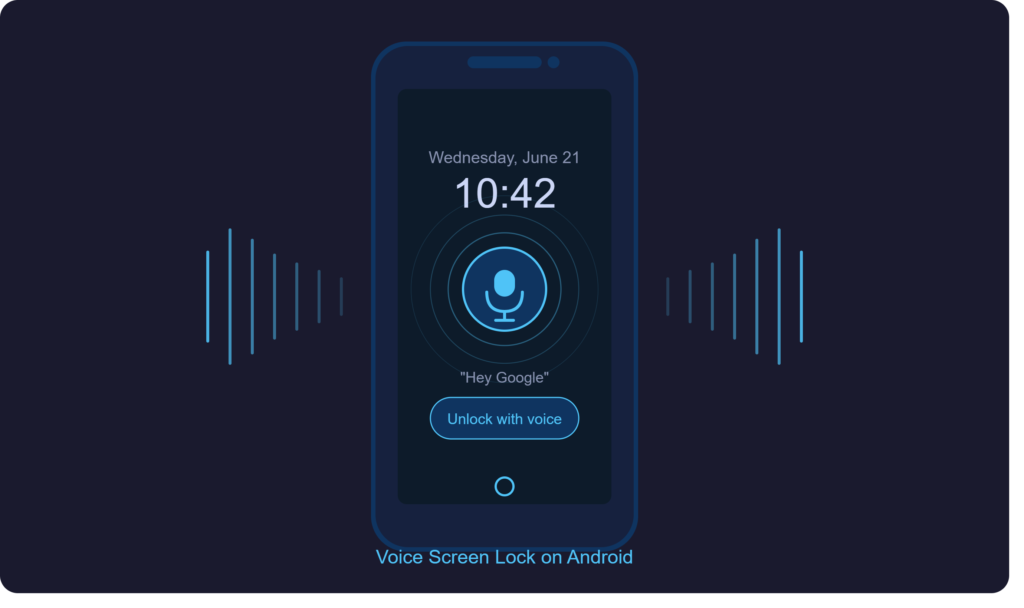
What Even Is Voice Screen Lock on Android?
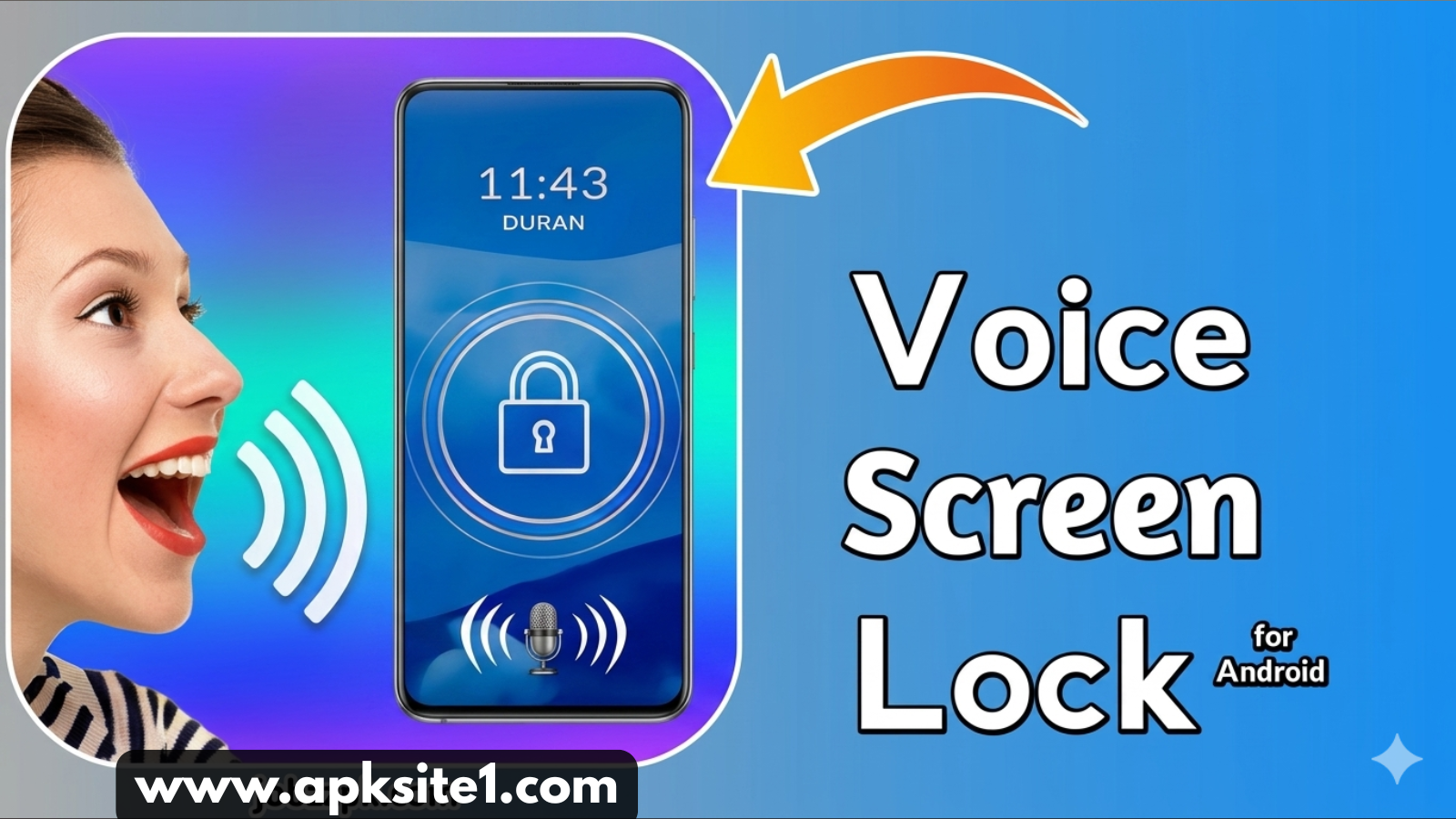
Simply put, it’s a way to unlock your phone using your voice instead of a PIN, pattern, or fingerprint. Your voice becomes the key. Some Android phones have this built into their settings, while others need a little help from Google Assistant or a third-party app.
Here’s the thing my competitor’s articles don’t tell you: not every method works the same on every device. A Samsung Galaxy S23 behaves differently than a Pixel 7 or a Xiaomi phone. I learned this the frustrating way after setting everything up on one phone and then expecting it to work the same on my backup device. Spoiler: it didn’t.
Method 1: Use Google Assistant’s Voice Match (The Easiest Starting Point)
This is the most reliable method I’ve used, and it works on most Android phones running Android 5.0 or later.
Here’s how to set it up:
- Open the Google app on your phone (the one with the colorful G icon — not Chrome).
- Tap your profile photo or the three-dot menu, then go to Settings.
- Select Google Assistant, then tap Hey Google & Voice Match.
- Toggle Hey Google to on.
- Tap Voice Model and follow the prompts — you’ll say “Hey Google” a few times so it learns your voice.
- Look for the Unlock with Voice Match toggle. Enable it.
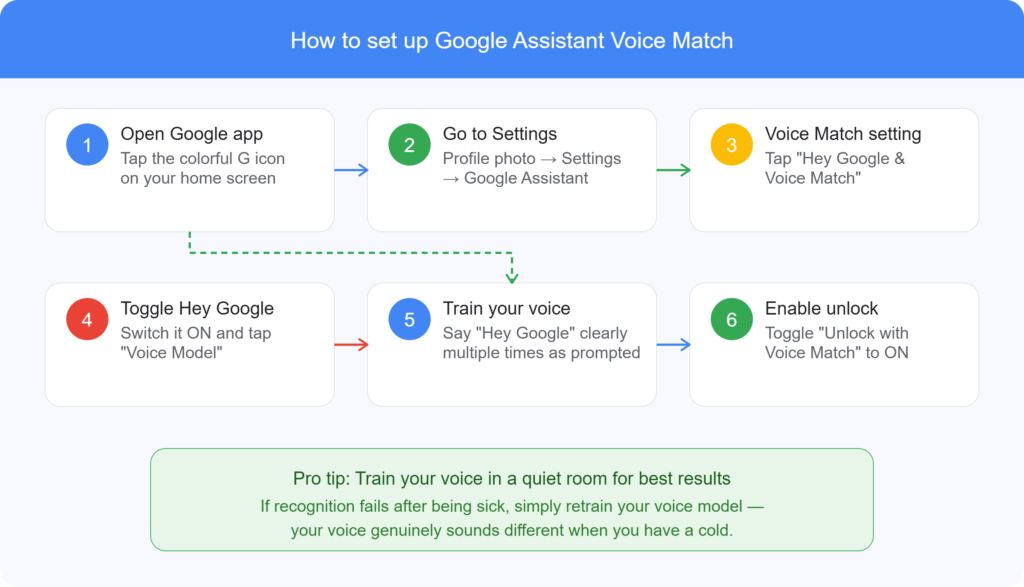
Now when your screen is off, just say “Hey Google” and your phone will recognize your voice and unlock.
A real heads-up: This doesn’t work perfectly in loud environments. I tried it at a coffee shop once, and it kept mishearing me. Voice Match works best when you’re in a reasonably quiet space. Also, if you have a cold and your voice changes, expect some failed attempts — train your voice model again when you’ve recovered.
Method 2: Smart Lock — Android’s Built-In (and Underused) Feature
Most people have no idea Smart Lock even exists, and it’s been on Android for years. It doesn’t strictly use voice, but it includes a “Trusted Voice” option on some devices.
Steps to access Smart Lock:
- Go to Settings → Security (or Biometrics & Security on Samsung).
- Scroll down and tap Smart Lock.
- You’ll need to enter your PIN or pattern first.
- You’ll see options like Trusted Devices, Trusted Places, and sometimes Voice Match (labeled differently by manufacturers).
On Pixel phones, Smart Lock integrates directly with Google’s Voice Match setup. On older Samsung devices, you might not see a voice option at all — that’s where third-party apps come in.
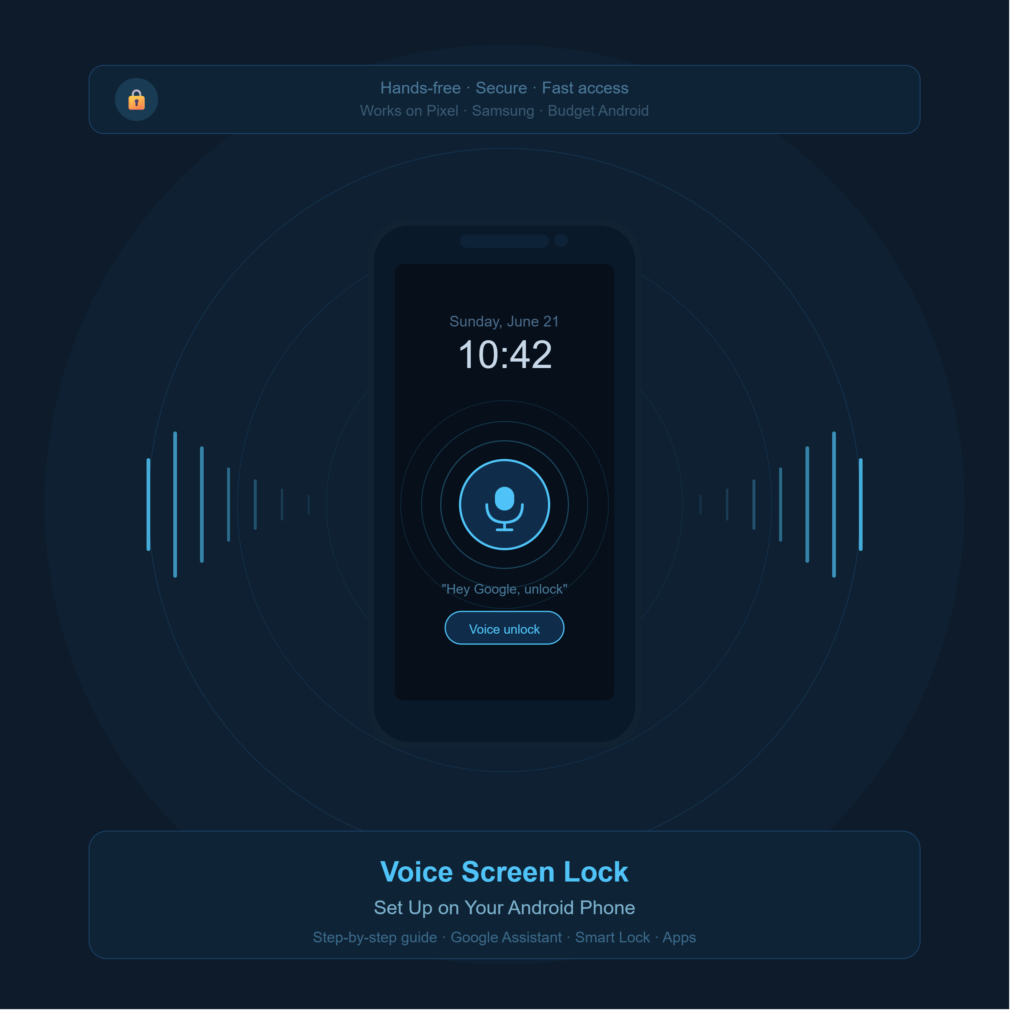
Method 3: Third-Party Voice Lock Apps (For Phones Without Built-In Support)
If your phone doesn’t support native voice unlock, the Google Play Store has a few apps worth trying. I tested a couple of them, and here’s my honest take:
Apps I tried:
- Voice Screen Lock — Simple interface, works reasonably well. Requires microphone permissions (obviously). Free version has ads, which is fine.
- Smart Voice Unlock — Has more customization options, lets you set a custom phrase instead of just “Hey Google.”
How to use them (general steps, since each app varies slightly):
- Download and install your chosen app from the Play Store.
- Open the app and grant microphone permissions when prompted.
- Follow the voice training — you’ll record your unlock phrase 3–5 times.
- Set up a backup unlock method (PIN or fingerprint) — every good app will ask you to do this, and you should.
- Test it on the lock screen.
What I learned the hard way: Some of these apps drain battery faster than expected because they keep the microphone listening in the background. Check your battery usage settings after a day or two and see if the app is eating more power than you’d like.
Here is one of the Third Party App:
Method 4: Samsung-Specific Voice Wake-Up (For Galaxy Users)
If you’re on a Samsung device, there’s an extra layer here. Samsung has its own Bixby voice assistant, and you can set up Voice Wake-Up through Bixby settings.
- Open the Bixby app or say “Hey Bixby” to activate it.
- Go to Settings → Voice Wake-Up.
- Toggle it on and record your voice sample.
- Under Bixby Settings, look for unlock options.
Fair warning: Bixby’s voice recognition isn’t as accurate as Google Assistant in my experience. I had it misfire several times when my roommate spoke nearby. If you’re privacy-conscious, this might actually be a concern rather than a feature.
Method 5: Using Google Assistant Routines for Hands-Free Access
This is a slightly different approach — instead of unlocking the phone with your voice, you set up Google Assistant Routines that trigger when you say specific phrases. You can automate unlocking combined with other actions (like turning on Bluetooth or opening an app).
- Open Google Assistant and go to Routines.
- Tap the + button to create a new routine.
- Set a voice command trigger phrase.
- Add actions — like opening the home screen or launching an app.
This works best if you already use Google Assistant heavily. It’s not a traditional “lock screen unlock” but it effectively gets you past common locked-screen barriers with your voice.
Common Mistakes I See People Make
Not setting up a backup unlock method. Voice recognition fails. Phones glitch. Always have a PIN or fingerprint as backup — every security setup I’ve ever used has taught me this.
Training voice in a noisy environment. If you record your voice model while the TV is on or people are talking around you, the recognition will be inconsistent. Find a quiet room.
Forgetting to retrain after being sick. Your voice genuinely sounds different when you have a cold or sore throat. If recognition starts failing, retrain the model.
Relying on voice lock for high-security situations. Voice screen lock on Android is great for convenience, but it’s not as ironclad as a complex PIN or biometric fingerprint. Use it smartly — don’t rely on it alone for banking apps or sensitive accounts.
Ignoring app permissions. Third-party voice unlock apps need microphone access 24/7. Make sure you’re okay with that and only use apps from reputable developers with good reviews.
Which Method Should You Actually Use?
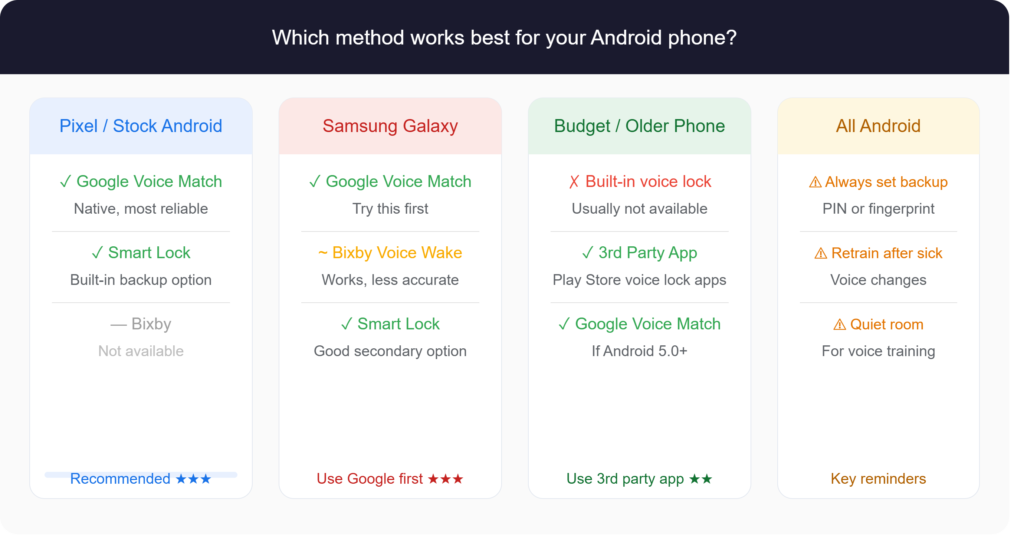
Here’s my honest recommendation after testing everything:
- Pixel or stock Android phone? → Stick with Google Assistant Voice Match. It’s the smoothest and most reliable.
- Samsung Galaxy? → Try Google Assistant first. Use Bixby Voice Wake-Up as a secondary option if you’re already in the Samsung ecosystem.
- Older Android or budget phone? → A third-party app like Voice Screen Lock from the Play Store will do the job.
- Want something automatic? → Smart Lock with trusted devices or trusted places is actually more reliable than pure voice unlock for most people.
A Few Things Worth Knowing Before You Start
Voice screen lock on Android has improved a lot in the last couple of years, but it’s still not as seamless as Face ID on iPhones (I say that as someone who uses both). It works best as a convenience feature layered on top of your existing security — not as a replacement for it.
Also, always make sure your Android OS is up to date before setting any of this up. I once spent an hour troubleshooting voice match issues on an older Android version, only to find that a software update fixed the entire problem in ten minutes.
The feature is genuinely useful once you get it working right. And once you’ve unlocked your phone with just your voice while carrying groceries or driving (with a hands-free setup), you’ll wonder why you didn’t set it up sooner.
Have you tried voice unlock on your Android? Drop a comment below and let me know which method worked best for you — especially if you’re on a less common device brand.
For more information, visit: APKSITE1