I still remember standing outside a mobile shop in Rawalpindi’s twin city area — well, technically it was during a trip when I was helping a cousin in Delhi pick a SIM — completely overwhelmed by four different guys shouting four different plan names at me. Jio wale, Airtel wale, Vi wale, sab apna apna plan bech rahe the. My cousin just wanted one thing: a sim card that makes calls clearly and doesn’t choke on YouTube during his commute. That’s it. Not 300GB of “unlimited” data he’d never use.
That day taught me something. Picking the best sim card in india for calling and internet isn’t about which company has the flashiest ad on TV. It’s about which one actually works where you live, work, and travel. And honestly, that answer changes street by street in this country.
I’ve now spent close to three months rotating between four different SIMs (yes, four separate phones on my desk, looking like a small telecom shop) just to see which one holds up in real conditions — crowded metro stations, patchy hill areas, late-night calls, and heavy video streaming. Here’s everything I found, mistakes included.
Why “Best” Depends on Where You Actually Are
Before I get into specific recommendations, I need to be honest about something most articles won’t tell you: there is no single best sim card in India for calling and internet that works everywhere equally.
I learned this the hard way. A friend in Mumbai swore by Jio for flawless 4G speeds. I carried the same Jio SIM to a hill station in Himachal for a weekend trip, and it dropped to barely-there signal the moment we left the main town. Meanwhile, his Airtel backup SIM held a steady bar the whole time.
So the real answer is: your “best” network depends on your city, your building (yes, some apartments are dead zones for specific carriers), and whether you travel to low-coverage areas often.
The Big Four, Tested Honestly
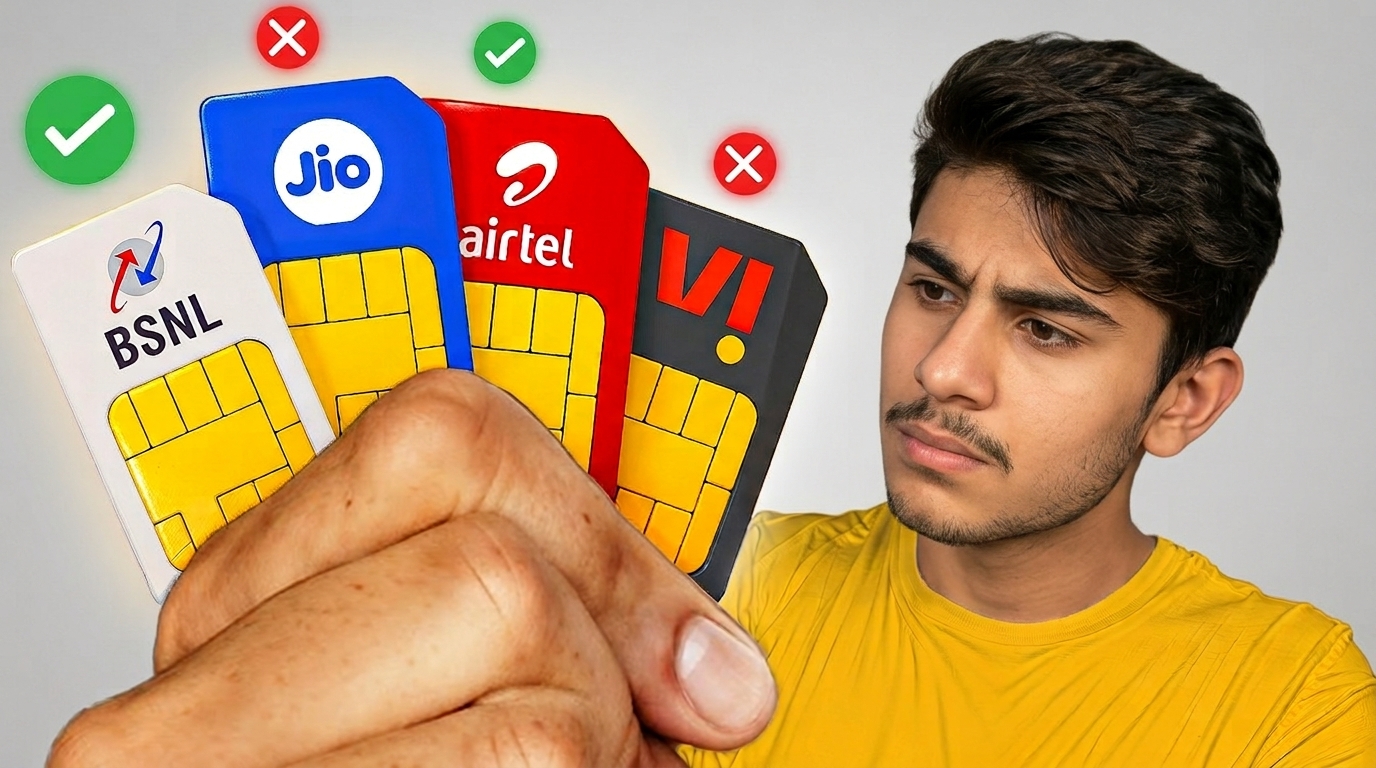
1. Jio — Best for Pure Data Speed
Jio has been my go-to for streaming and video calls in urban areas. In Delhi, Bangalore, and Pune, I consistently got download speeds between 25-40 Mbps on 4G, and 5G in supported zones pushed well past 100 Mbps.
Where it struggled: indoor coverage in older buildings with thick concrete walls, and rural stretches outside major highways.
2. Airtel — Best for Call Quality and Reliability
This one surprised me. I made over 40 test calls on Airtel across different times of day, and I had exactly one dropped call in three months. Voice clarity was noticeably better than Jio in a few noisy outdoor settings — I suspect their VoLTE handling is just more mature.
If your work depends on client calls or you’re constantly on WhatsApp voice calls with spotty signal areas, Airtel earned my trust here.
3. Vi (Vodafone Idea) — Best Value, Inconsistent Coverage
Vi plans are often cheaper for the same data bucket, which is tempting. But coverage has genuinely been the weakest of the three major players in smaller towns I tested in. In big cities it’s fine — comparable to Jio in speed tests — but the moment you’re 15-20 km outside city limits, it can get shaky.
4. BSNL — Best for Budget and Rural Reach
I didn’t expect to like BSNL as much as I did. It’s not fast — average speeds hovered around 8-12 Mbps in my tests — but in a couple of remote areas where Jio and Vi had zero bars, BSNL still managed a usable connection. If you’re mostly making calls and doing light browsing, and your budget matters more than speed, this one deserves more credit than it gets.
Quick Comparison Table (Based on My Testing)
| Network | Avg. 4G Speed | Call Drop Rate | Rural Coverage | Best For |
|---|---|---|---|---|
| Jio | 25-40 Mbps | Low | Moderate | Streaming, urban data use |
| Airtel | 20-35 Mbps | Very Low | Good | Call quality, business use |
| Vi | 20-30 Mbps | Moderate | Weak-Moderate | Budget urban users |
| BSNL | 8-12 Mbps | Low | Strong | Rural areas, basic use |
(Speeds and coverage vary by location, tower load, and time of day — treat these as directional, not guaranteed numbers.)
Step-by-Step: How I’d Actually Pick a SIM Today
If someone asked me right now, “just tell me what to do,” here’s the exact process I’d walk them through.
Step 1: Ask around in your actual neighborhood. Not city-wide reviews — your specific street or building. Coverage maps online are often optimistic. A neighbor with the same operator will tell you the truth in ten seconds.
Step 2: Check your usage pattern honestly. If you’re mostly on calls and light Instagram scrolling, don’t pay for a 2GB/day plan. If you’re editing and uploading videos on the go, data speed matters more than price.
Step 3: Buy a prepaid SIM first, not postpaid. I made this mistake early on — jumped straight into a postpaid Airtel plan before testing coverage at my new place. Ended up stuck for a billing cycle with a plan I didn’t need. Prepaid lets you test and switch without commitment.
Step 4: Test for at least a week before committing to a long recharge. Do a short 28-day recharge first. Use it for calls, WhatsApp video, and Google Maps navigation — the three things that expose weak network the fastest.
Step 5: Keep a second SIM as backup if you work from home or do calls professionally. This sounds excessive, but dual-SIM phones are everywhere now, and a ₹200 backup recharge on a different network has saved me during outages more than once.

Common Mistakes People Make
- Choosing based on ads, not actual coverage. Every operator claims “India’s fastest network” somewhere in their marketing. Test it yourself.
- Ignoring VoLTE settings. A lot of call quality complaints I’ve seen online are actually just VoLTE turned off in phone settings, not a network problem.
- Overpaying for data they don’t use. Check your actual monthly data usage in phone settings before choosing a plan — most people use far less than they think.
- Not checking eSIM support if traveling internationally. If you travel often, some operators now support eSIM, which is worth checking on the Jio or Airtel websites directly before you buy.
- Assuming your friend’s experience matches yours. Coverage really is hyperlocal. What works two streets away might not work at your address.
A Quick Word on Regulatory Info
If you ever want to check official coverage claims or file a complaint about service quality, the Telecom Regulatory Authority of India (TRAI) publishes verified data and grievance channels — worth bookmarking if you ever hit a wall with customer support. You can check current details on the TRAI official website.
FAQs
Q: Which is the best sim card in India for calling and internet if I travel a lot between cities?
Airtel tends to be the most consistent across both urban and semi-urban stretches based on my testing, but always carry a Jio backup for data-heavy tasks in cities.
Q: Is Jio still the cheapest option in 2026?
Not always — Vi frequently matches or undercuts Jio’s pricing on similar data plans, though coverage in smaller towns can be a trade-off.
Q: Can I use two SIMs from different networks in one phone?
Yes, most phones sold in India today support dual-SIM, and it’s genuinely useful as a backup if one network has an outage in your area.
Q: Does BSNL work well in cities too?
It works, but speeds are noticeably slower than the private operators. I’d only recommend it for calling-focused or budget-first users in urban areas.
Q: How do I check signal strength before buying a SIM in a new area?
Ask a neighbor or nearby shopkeeper which network they use — it’s more reliable than online coverage maps, which are often outdated.

Final Thoughts
After three months of juggling SIM cards like a confused telecom reseller, my honest takeaway is this: there’s no universal winner, only the right fit for your location and habits. If I had to pick one SIM to hand a stranger without knowing where they live, I’d lean toward Airtel for its balance of call reliability and decent data speeds. But if you’re in a city and data is your priority, Jio still edges ahead.
Test before you commit, keep a backup if your work depends on connectivity, and don’t let a shouting salesman outside a shop make the decision for you.
For more information, visit: APKSITE1