
I still remember sitting in my room at 11 PM, staring at an empty Upwork profile, wondering why anyone would hire me when I had literally nothing to show. No portfolio. No client reviews. Not even a proper profile picture I liked.
That was almost two years ago. Since then I’ve picked up freelance jobs for beginners that turned into real, recurring income — and I’ve also wasted weeks chasing gigs that led nowhere. So this isn’t a “top 10 platforms” list copied from somewhere else. This is what actually worked, what flopped, and what I’d tell a friend starting from zero today, whether you’re in the US, the UK, or anywhere else.
Why “No Experience” Isn’t the Problem You Think It Is
Here’s something nobody told me when I started: clients hiring beginners aren’t expecting a resume full of achievements. They’re expecting someone who shows up, communicates clearly, and does what they promised.
I landed my first paid gig (a $40 blog editing job) not because I was the most skilled applicant, but because I was the only one who replied within an hour and asked a smart follow-up question about the client’s tone preferences. That’s it. That’s the whole edge.
So if you’re worried you’re “not qualified enough,” relax. Most freelance jobs for beginners don’t need a degree or years of training — they need reliability and basic competence in one skill.
The Skills That Actually Get Beginners Hired
I tried a bunch of categories before finding what stuck. Here’s what consistently has beginner-friendly demand right now:
- Writing and editing — blog posts, product descriptions, proofreading
- Virtual assistance — inbox management, scheduling, data entry
- Basic graphic design — Canva-based social media graphics (you don’t need Photoshop skills to start)
- Transcription — turning audio/video into text, great if English is your first language
- Customer support/chat support — for small e-commerce brands
- Social media management — posting schedules, captions, basic engagement
Notice none of these require coding or years of design school. They require a laptop, decent internet, and patience.
Step-by-Step: How I Actually Got My First Clients
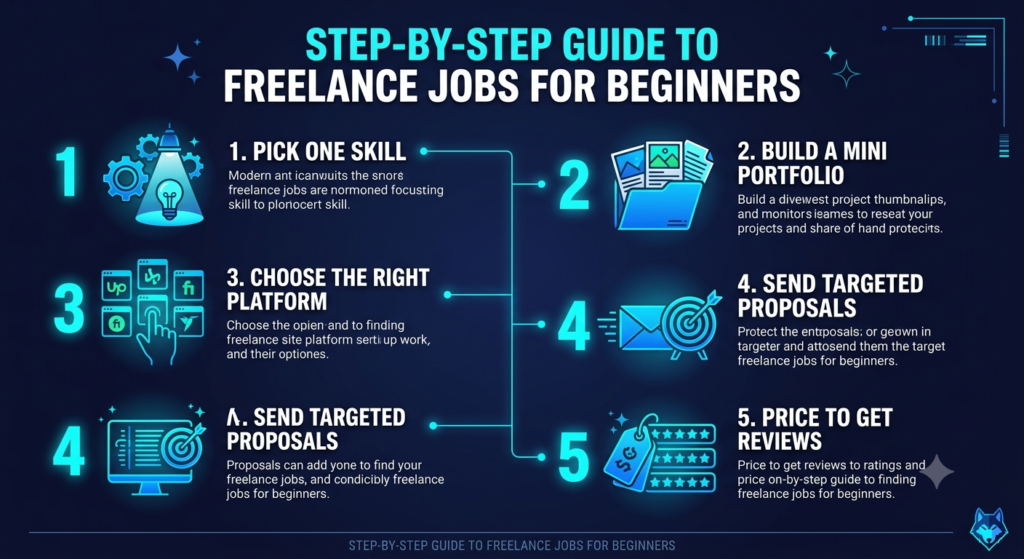
Step 1: Pick one skill, not five
My biggest early mistake was listing myself as a “writer, designer, VA, and social media manager” all at once. Clients read that as “jack of all trades, master of none” and scrolled past me. Once I narrowed my profile down to just blog writing, my response rate actually went up.
Step 2: Build a mini portfolio before you have clients
I didn’t wait for paid work to build samples. I wrote three sample blog posts on topics I cared about and put them in a free Google Doc I could link to. It looked far more legitimate than an empty portfolio section.
Step 3: Set up profiles on the right platforms
For US-based beginners, Upwork and Fiverr are still the most reliable starting points. For UK freelancers, PeoplePerHour tends to have more local clients who prefer same-timezone communication. Contra is worth trying too since it doesn’t take a commission cut the way Upwork does.
Step 4: Send fewer, better proposals
I used to copy-paste the same proposal to 20 jobs a day. Zero replies. When I switched to writing 3-4 highly specific proposals a day — mentioning the client’s actual project by name — I started getting replies within the first week.
Step 5: Price low at first, but not embarrassingly low
I charged $15 for my first blog post. Looking back, that was too low, but it wasn’t zero, and it got me my first review. After five reviews, I raised my rate to $35, then $60. Reviews matter more than money in month one.
A Mistake That Cost Me a Client
Early on, I accepted a project without asking enough questions about scope. The client wanted “a few product descriptions.” I assumed that meant five. It meant twenty-five. I delivered five, got a confused message back, and had to scramble to finish the rest for free to save the relationship.
Lesson learned: always confirm exact deliverables, deadlines, and revision limits before you start, even for small gigs. A two-line message clarifying scope saves you hours of frustration later.
Tools That Made This Easier
A few things genuinely helped me stay organized and look more professional as a beginner:
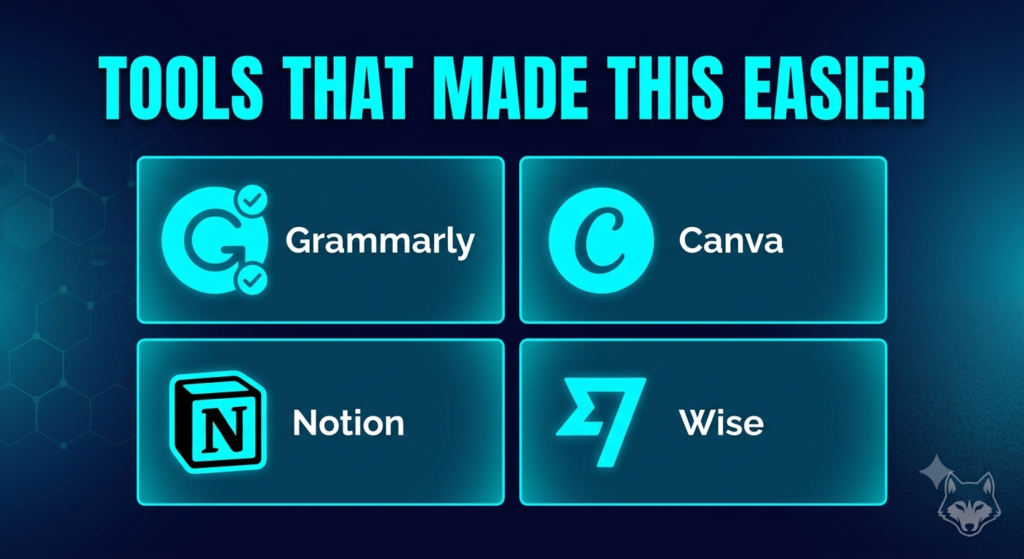
- Grammarly — free version is enough to catch embarrassing typos in proposals
- Canva — for quick portfolio graphics or social media samples
- Notion — I track every client, deadline, and payment status in one free workspace
- Wise (formerly TransferWise) — much better exchange rates than PayPal if you’re getting paid internationally, especially useful for UK freelancers working with US clients
Real Example: How a UK Beginner I Know Got Started
A friend of mine in Manchester wanted to try freelance virtual assistance with zero prior experience. She started by offering free trial hours to two small business owners she found through a local Facebook group, just to build reviews. Within a month, both became paying clients, and she used those two testimonials to land three more clients on PeoplePerHour. No fancy course, no paid certification — just proof she could follow instructions and hit deadlines.
Common Mistakes Beginners Make (That I Also Made)
- Applying to jobs you’re clearly underqualified for. Stretch a little, but don’t waste time on senior-level gigs in month one.
- Undervaluing communication. Being pleasant and responsive beats being the most “skilled” applicant more often than you’d expect.
- Ignoring red flags. If a client refuses to discuss payment terms upfront or asks you to work “for exposure,” walk away.
- Quitting after the first week of silence. My first two weeks on Upwork got zero replies. Client three came in week three. Consistency matters more than instant results.
- Not saving client feedback. Screenshot every good review or compliment — you’ll need this social proof for your next application.
Do I need a degree to get freelance jobs as a beginner?
No. Most beginner-friendly freelance jobs care about sample work and communication far more than formal qualifications.
Which platform is best for someone with zero experience?
Upwork and Fiverr work well for US-based beginners, while PeoplePerHour and Contra tend to favor UK and European freelancers.
How long does it take to get a first client?
For me it took about three weeks of consistent, targeted applications. Some people get lucky in days; others take longer. Consistency matters more than speed.
Should I work for free to build a portfolio?
A short free trial task or two is fine to build initial proof of work, but don’t make a habit of it — your time has value even as a beginner.
What This Actually Looks Like Long-Term
Freelance jobs for beginners rarely pay well in month one, and I want to be honest about that instead of promising overnight riches. My first month, I made about $120 total. By month four, that turned into around $700, mostly from repeat clients rather than new ones. The real income growth came from retaining a handful of clients long-term, not constantly chasing new gigs.
If you’re serious about this, treat your first month as an investment period, not a paycheck. The goal isn’t to get rich immediately — it’s to collect your first few reviews and figure out which skill people actually want to pay you for.
For more information, visit: APKSITE1