
My phone died on me at 6:45 AM, twenty minutes before I had to leave for the airport, with my boarding pass sitting inside a dead screen.
That was two years ago. I plugged it into whatever charger was closest — some old 10W brick I’d had since college — and stared at the battery icon like it owed me money. Fifteen minutes later, it had crawled up to 8%. I missed my gate call and had to sprint through security waving a paper printout like it was 2009.
That morning is the entire reason I started actually paying attention to mobile fast charging instead of just assuming “a charger is a charger.” Turns out, that assumption cost me more than one missed flight.
Since then I’ve bought, tested, and occasionally fried (more on that later) close to a dozen chargers across five different phones. This isn’t a spec sheet copied off a manufacturer’s press release. It’s what I’ve actually learned by living with mobile fast charging every single day in 2026.
What Mobile Fast Charging Actually Means (In Plain English)
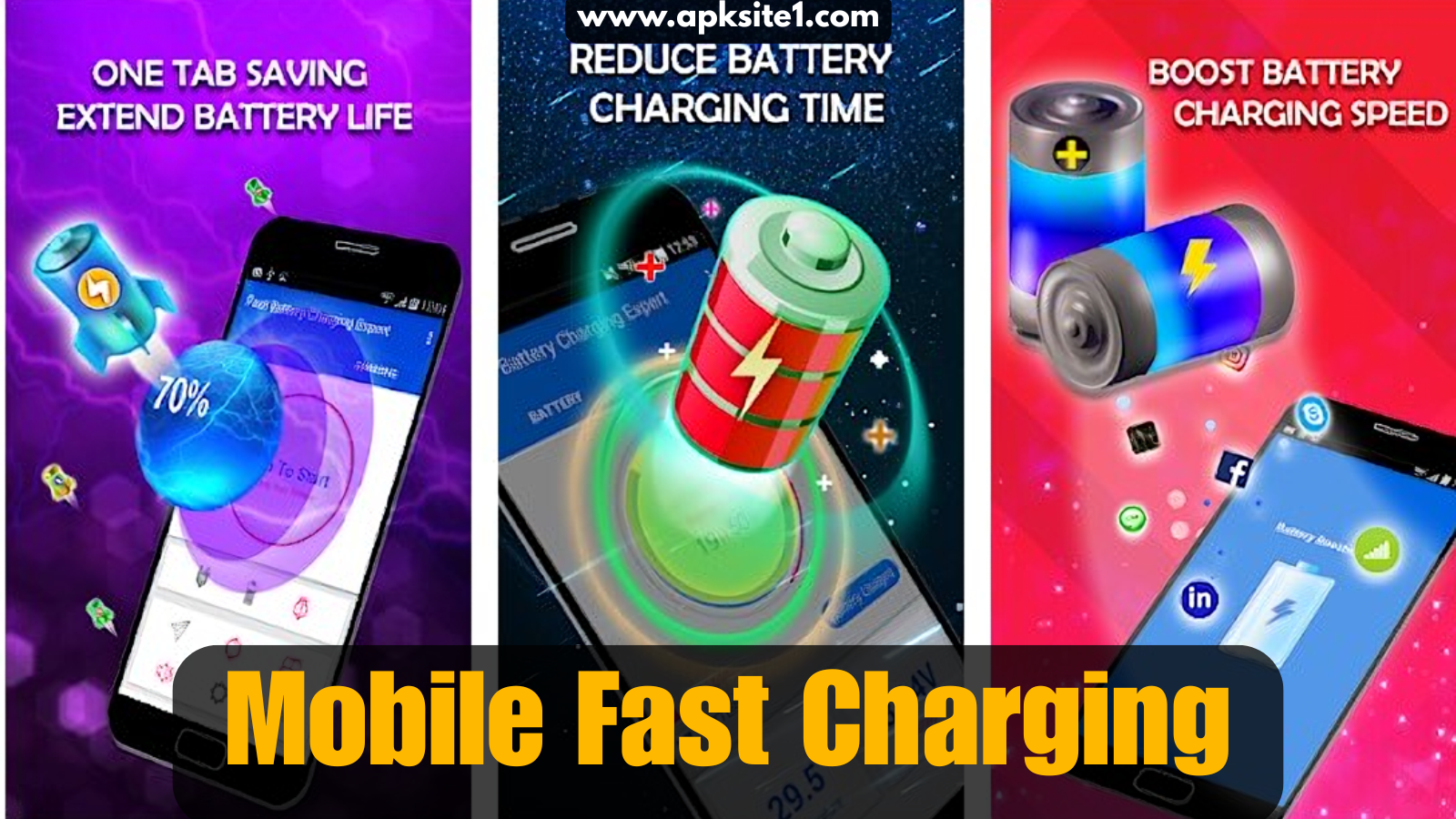
Here’s the thing nobody explained to me back then: your phone doesn’t just “charge faster” because the box says so. Mobile fast charging works by pushing more power — measured in watts — into your battery than a standard charger ever could.
A basic old-school charger delivers around 5 to 10 watts. That’s the 8%-in-15-minutes disaster I lived through. A modern fast charger can push 65W, 80W, even 100W or more, depending on your phone and the charger you pair it with.
More watts means more energy reaching the battery per minute. That’s it. That’s the whole trick. The complicated part — the part that actually matters — is how your phone manages that power without cooking itself.
How Mobile Fast Charging Works Without Frying Your Battery
I used to think higher wattage was just “more electricity, faster.” My electrician neighbor set me straight one evening while I was complaining about a charger that got uncomfortably warm.
Fast charging isn’t just cranking up the voltage and hoping for the best. Phones use a negotiation process between the charger and the battery — the two literally “talk” to each other over the cable to agree on how much power is safe to send at any given moment.
Most phones today lean on one of two approaches:
- Open standards like USB Power Delivery (USB-PD) with PPS (Programmable Power Supply), which is what Apple, Samsung, and Google use. This is the same standard body behind USB-C in general — you can read more about it directly on the USB Implementers Forum’s site if you want the technical version.
- Proprietary fast-charging protocols, like OnePlus’s SuperVOOC or Xiaomi’s HyperCharge, which only hit their top speeds with the exact charger and cable the brand sells you.
That difference matters more than most buying guides admit, and it’s the mistake I made first.
The Mistake That Taught Me the Most
I bought a OnePlus phone in 2024 and, being cheap, grabbed a random “120W fast charger” off a marketplace site instead of using the one in the box.
My phone charged at basically the same speed as an old iPhone brick. Slow. Painfully slow.
Turns out proprietary fast charging protocols usually only unlock their real speed with the manufacturer’s own charger and cable. Plug a OnePlus phone into a generic USB-PD charger and you’ll typically get a fallback speed — often somewhere between 18W and 45W — nowhere near the phone’s real ceiling.
Lesson learned the expensive way: mobile fast charging isn’t universal. The charger, the cable, and the phone all have to agree, or you’re stuck at fallback speed and won’t even know it.
What’s Actually New in Mobile Fast Charging for 2026
I’ve been keeping a running note on my phone (ironic, I know) tracking what’s changed over the past year or so. A few things stand out:
Silicon-carbon batteries are the quiet MVP. Instead of the older graphite battery cells, newer phones use silicon-carbon chemistry, which packs more capacity into the same size battery and, in my experience, tolerates fast charging with noticeably less heat buildup than the phone I owned two years ago.
Dual-cell and even quad-cell battery designs. Rather than pushing all the current into one big cell, several 2026 flagships split the battery into two or four smaller cells that charge in parallel. It sounds like a gimmick until you notice your phone charging fast without getting hot enough to make you uncomfortable holding it.
The wattage race has genuinely split the market. On one side, brands like Realme and Xiaomi are pushing wired charging past 200W, with some flagship models advertising near-240W peaks. On the other side, Samsung and Apple are deliberately staying closer to 45–65W, betting that most people care more about long-term battery health than shaving ten minutes off a charge.
I’ve used phones from both camps, and honestly? Both approaches have a point. More on that below.
The charging curve still tapers hard, no matter the wattage. This is the part marketing copy conveniently leaves out. Every fast-charging phone I’ve tested hits its top wattage for a short burst — sometimes only a minute or two — then tapers down significantly to protect the battery as it gets closer to full. So that “0 to 100% in 15 minutes” number on the box is really “0 to about 80% in 15 minutes, then a slower crawl to 100%.”
Step-by-Step: How to Actually Get the Most Out of Mobile Fast Charging
After all my trial and error, here’s the routine I actually follow now:
- Use the charger that came in the box, at least once, to know your baseline. Time how long it takes to hit 50% and 80%. Write it down. You’ll need this number later to catch a slow or fake charger.
- Check your phone’s actual supported wattage before buying a replacement charger. A quick search of “[your phone model] fast charging wattage” takes thirty seconds and saves you from my OnePlus mistake.
- Match the protocol, not just the wattage. A 100W charger that doesn’t support your phone’s specific protocol (SuperVOOC, HyperCharge, USB-PD PPS) may still charge slower than expected.
- Charge in short, frequent bursts instead of always going 0 to 100%. I keep my phone roughly between 20% and 85% most days now. It charges faster within that range anyway, since that’s where the fastest part of the curve lives.
- Avoid charging under a pillow, blanket, or inside a closed bag. I did this once during a road trip and my phone got hot enough that it actually paused charging entirely as a safety measure. Heat is fast charging’s real enemy, not the wattage itself.
- Stick to certified cables. A cheap or damaged USB-C cable is one of the most common reasons fast charging silently drops to slow-charging speeds without any warning on screen.
Real Examples From the Phones I’ve Actually Used
- My current daily driver charges from roughly 20% to 80% in under 25 minutes using its bundled charger — genuinely useful before a meeting when I forgot to plug in overnight.
- A friend’s Samsung flagship charges noticeably slower on paper (it caps out well under 100W) but barely gets warm during the process, and the battery still feels strong after well over a year of daily use.
- The generic 65W GaN charger I now carry when traveling — the kind of small, multi-port brick from brands like Anker or Ugreen — covers my laptop, phone, and earbuds case with one plug, even if it doesn’t hit the absolute top speed my phone is capable of.
That last one might be the most practical takeaway in this entire article: you don’t always need the fastest possible charger. You need one fast enough that you stop thinking about it.
Common Mobile Fast Charging Mistakes to Avoid
- Assuming any USB-C charger will give you full speed. It won’t, unless the protocols match.
- Ignoring the cable. People obsess over the charger and forget the cable is half the equation.
- Charging overnight every single night at max speed. It’s not catastrophic occasionally, but keeping a battery at 100% for eight hours, repeatedly, adds unnecessary stress over time.
- Buying an ultra-high-wattage charger your phone can’t actually use. A 240W charger on a phone that maxes out at 65W isn’t dangerous, but it’s money you didn’t need to spend.
- Charging on soft surfaces that trap heat, like beds, couches, or car seats.
Is Mobile Fast Charging Safe for Your Battery?
Genuinely, yes, for the vast majority of modern phones. Manufacturers have gotten much better at temperature monitoring and adaptive charging speeds since the early “fast charging horror story” days.
That said, safe doesn’t mean effortless. The phone does most of the protective work automatically, but heat is still the main thing that ages a battery faster than normal. Keep it cool, use certified accessories, and you genuinely don’t need to worry much.
Final Thoughts
I went from missing a flight over a dead phone to genuinely not thinking about charging anymore, and the difference wasn’t just “buying a more expensive charger.” It was understanding how mobile fast charging actually behaves — the tapering curve, the protocol matching, the heat management — instead of trusting whatever number is printed on the box.
If you take away one thing from all my trial and error, let it be this: match your charger to your phone’s actual protocol, keep things cool, and stop chasing the biggest wattage number you can find. That’s what made the real difference for me, and it’s a lot cheaper than a marketplace charger that turns out to be useless.
For more information, visit: APKSITE1

One Comment on “Mobile Fast Charging in 2026: The Surprising Truth After 6 Months of Testing”